
PhD thesis explores new biomarkers for predicting response to cancer immunotherapy
How can we better predict which cancer patients will benefit from immunotherapy? This is the central question addressed in Yuliu Guo’s PhD thesis, Computational Discovery and Characterization of Multi-Source Cancer Neoepitopes for Immune Checkpoint Inhibitor Response Prediction, which she defended Friday 13th of Nov. in Auditorium 2, Rigshospitalet. The research included data from the ProTarget trial and was conducted in close collaboration between MDxCore and the Phase 1 Unit at Rigshospitalet, and the University of Copenhagen.
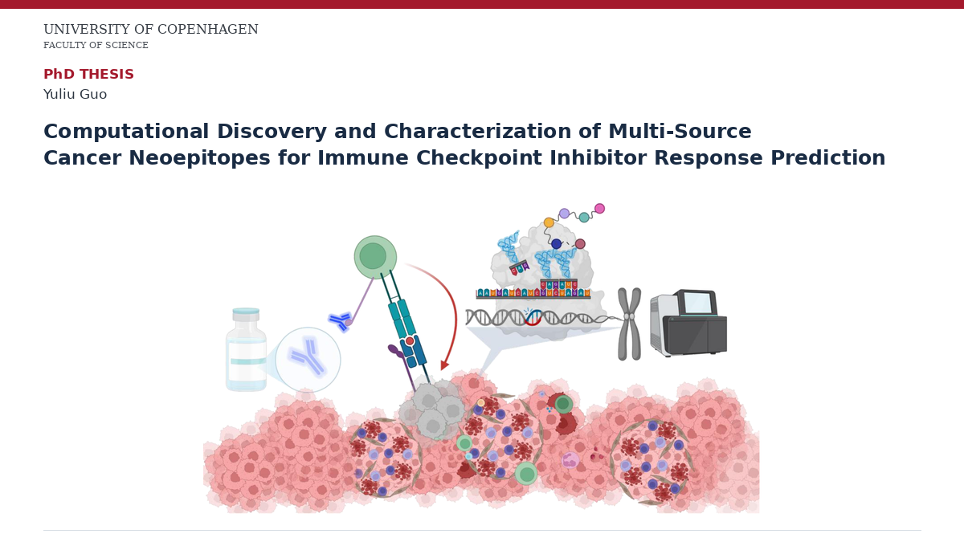
Immune checkpoint inhibitors (ICIs) are cancer treatments that aim to restore the immune system’s ability to recognise and attack cancer cells. While these treatments can lead to durable clinical responses, only a subset of patients benefit. Identifying reliable biomarkers that can predict treatment response and thereby improve treatment selection for the individual patient is therefore an important step towards more personalised cancer treatment.
Yuliu Guo’s research explored potential biomarkers for predicting response to ICIs through a combination of computational methods and multi-omics analyses. The work included a benchmarking study of detection of structural variants using short-read sequencing data, as well as an analysis of patients with advanced or metastatic solid tumours treated with PD-L1 inhibitors in the ProTarget trial.
By integrating genomic, transcriptomic and proteomic data, the study investigated potential neoepitopes arising from different types of genomic alterations and examined their relationship with the tumour immune microenvironment and treatment response. By combining variant detection, neoepitope prediction and characterisation of the tumour immune context, the work adds new insights into factors that may be associated with treatment response and provides a basis for further investigation. Overall, the thesis contributes with important new insights to the ongoing research in biomarkers associated with response to immune checkpoint inhibitors.